
In last week’s blog, we explored a critical truth:
You can’t change someone when they’re under stress.So if that’s true…
What should a leader actually do instead?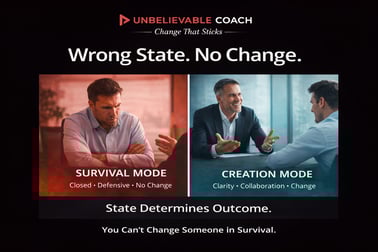
It shows up in moments like this:
You’re in a conversation that matters.
Something needs to change.
You explain it clearly.
And it still doesn’t land.
They nod… but nothing changes.
Or they push back.
Or they shut down.
Not because they don’t understand.
Because of the state they’re in when they hear it.
The Real Shift Leaders Must Make
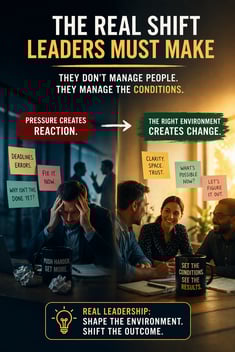 If you can’t create change in a stress state…
Then leadership is no longer about what you say.
It’s about when—and in what state—you say it.
Great leaders don’t just manage conversations.
They manage conditions.
Because they understand something most people miss:
Change doesn’t happen through pressure.
It happens through state.
What Effective Leaders Do Instead
Instead of pushing harder in the moment…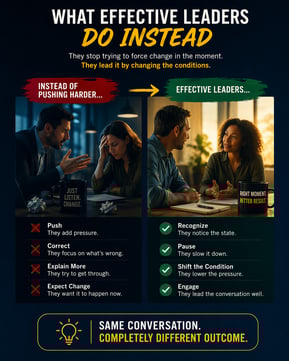
They shift their approach.
They recognize when someone is in stress.
They pause instead of pressing.
They help move the conversation out of survival…
and into a state where thinking is actually possible.
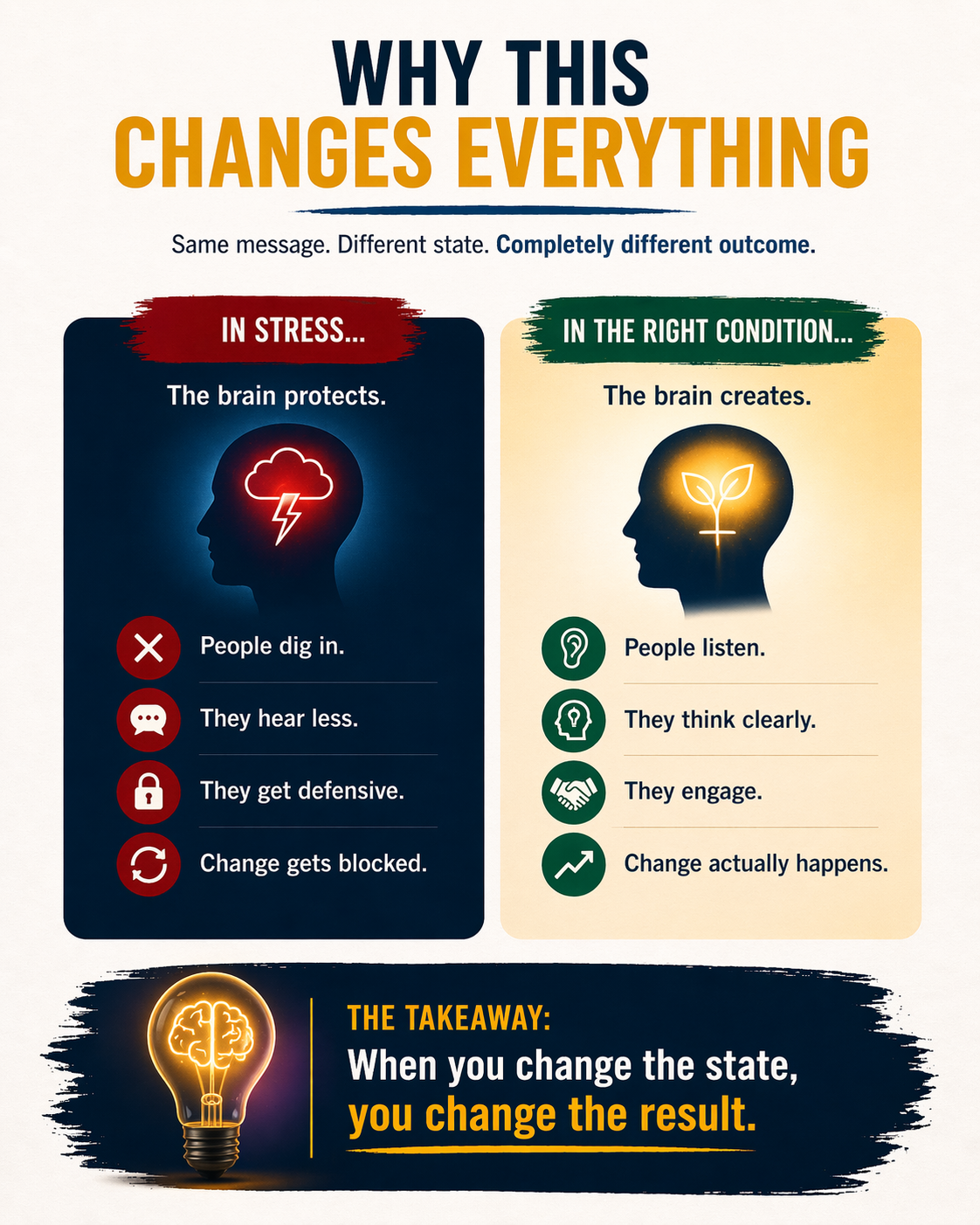
Because in a regulated state:
- People reflect
- They listen
- They engage
- They change
Same message.
Completely different outcome.
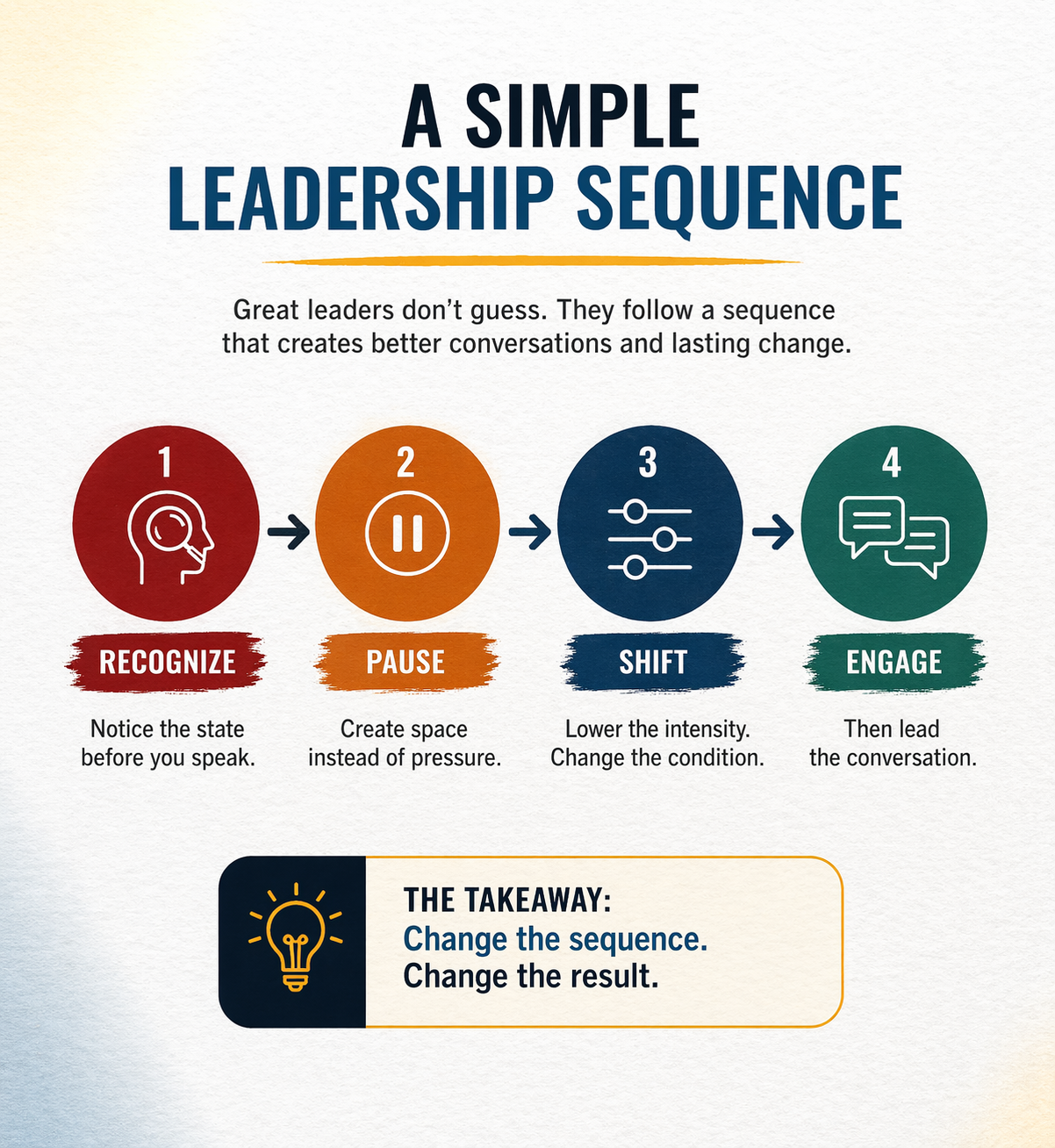
A Simple Leadership Sequence
When something needs to change, the sequence matters:
Recognize → Pause → Shift → Engage
- Recognize the signs of stress
- Pause the instinct to correct
- Shift the emotional state
- Engage once the mind is open
 Most leaders reverse this.
They engage first…
and wonder why it doesn’t work.
When leaders operate this way:
Conversations become more productive.
Resistance drops.
Clarity actually lands.
And change stops being something you push…
…and starts becoming something people can actually do.
 Because the goal isn’t to win the moment.
It’s to create the conditions where change can occur.
Growth Demands Strategic Discipline
.png?width=258&height=387&name=Why%20It%E2%80%99s%20So%20Hard%20to%20Change%20%E2%80%93%20The%20Paradox%20of%20Breaking%20the%20Habit%20(Preview%204-27-26%20blog).png)
In last week’s blog, we explored why you can’t change someone when they’re under stress.
If that’s true…
Then the real question becomes:
Why is change so hard—even when people are aware and trying?
That’s what we’ll explore next.
NEXT BLOG – “Why It’s So Hard to Change – The Paradox of Breaking the Habit”
Most people don’t struggle because of capability — they struggle because their thoughts, emotions, and behaviors are neurologically conditioned to repeat the same results.
Capability isn’t the problem.
Conditioning is.
.png.jpg?width=481&height=514&name=Its%20not%20a%20Capability%20Problem%20(Tight).png.jpg) When stress becomes the default state, even smart leaders end up repeating predictable outcomes. Change the pattern — change the result.
When stress becomes the default state, even smart leaders end up repeating predictable outcomes. Change the pattern — change the result.
Through Change Your Mind. Create New Results training: I help leaders interrupt stress-driven conditioning, regulate under pressure, and build cultures driven by intention rather than reaction.
If you're ready to move from reactive productivity to intentional performance, let’s talk.
 Doug Wick, Unbelievable Coach
Change That Sticks
Schedule a Strategic Conversation
Change the Pattern. Create New Results.
NEXT BLOG – “Why It’s So Hard to Change – The Paradox of Breaking the Habit”



.jpeg?width=150&height=135&name=Hand%20with%20marker%20writing%20the%20question%20Whats%20Next_%20(1).jpeg "Schedule a meeting")