
Change Your Mind. Create New Results.
You Don’t React Everywhere—Just in Certain Places
Most leaders don’t struggle all day.
They struggle in specific moments.
The weekly meeting that always gets tense.
That one person who pushes your buttons.
The pressure moment when time is tight, and decisions matter.
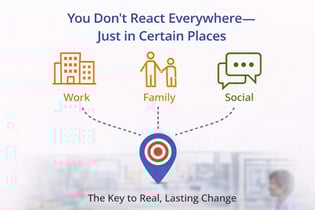 Same people.
Same place.
Same situation.
And almost every time…
The same reaction.
Not because you choose it.
Because your environment triggers it.
What Your Environment Actually Is
When most leaders hear “environment,” they think of culture in general terms.
But your real environment is much more specific.
It’s made up of:
- People — individuals who consistently trigger a reaction
- Places — meetings, rooms, or settings tied to past experiences
- Situations — recurring problems or decision points
- Time — when pressure is highest (running late, end of day, high stakes)
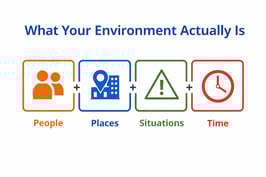
And when those combine…
They create predictable behavior.
You don’t walk into those moments neutral.
You walk in conditioned.
The Meeting That Always Gets You
You know the one.
The weekly operations meeting.
It starts fine.
Then something goes wrong—a missed shipment, a number that’s off, a delay that shouldn’t have happened.
The shift happens.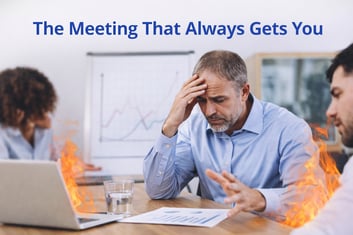
Your tone tightens.
You interrupt more.
You move faster.
You push harder.
You’ve been here before.
And your brain knows exactly how to respond.
Not intentionally.
Automatically.
That One Person Who Triggers You
Every leader has one.
The employee who challenges you.
The team member who doesn’t follow through.
The person who always seems to create friction.
And before the conversation even starts…
 Your body is already reacting.
Shorter patience.
Faster judgment.
Less curiosity.
You’re not responding to the moment.
You’re responding to the memory of every interaction before it.
The Pressure Moment
This is where it gets real.
 You’re late.
You’re behind.
Something important is on the line.
And in those moments—
Clarity drops.
Urgency rises.
Control increases.
Not because it’s the best way to lead.
Because it’s the most familiar.
Why This Happens
From a Neuro Change Solutions perspective, this isn’t about willpower.
It’s about conditioning.
Your brain and body learn from repetition.
So when you experience the same:
- People
- Places
- Situations
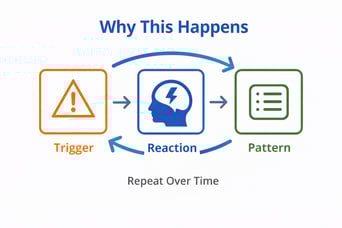 Your system doesn’t ask,
“What’s the best response?”
It defaults to,
“What did we do last time?”
And it runs that pattern.
Fast.
Before you’re aware of it.
When the Environment Leads, You Follow
Here’s the hard truth:
If your behavior is being triggered by your environment—
You’re not in control.
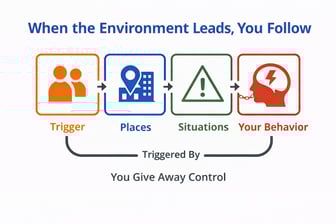 Your environment is.
And over time, that creates something even more powerful:
Your environment begins to shape your identity.
You start to believe:
“That’s just how I am in those situations.”
But it’s not who you are.
It’s what you’ve repeated.
Why Change Doesn’t Stick
Most leaders try to change globally.
“I’m going to be more patient.”
“I’m going to communicate better.”
“I’m going to stay calm under pressure.”
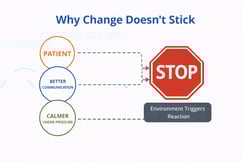 But change doesn’t fail because of intention.
It fails because it’s not tied to specific environments.
You don’t need to change everywhere.
You need to change:
- In that meeting
- With that person
- In that pressure moment
That’s where the pattern lives.
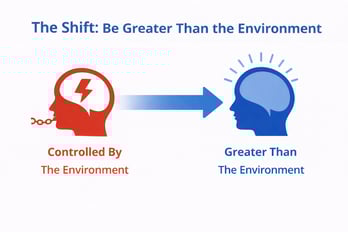
The Shift: Be Greater Than the Environment
This is where leadership changes.
Not by avoiding the environment.
But by entering it differently.
 Before the meeting begins…
Before the conversation starts…
Before the pressure hits…
Ask yourself:
How would I need to think, act, and feel
to be different in this exact situation?
Not generally.
Specifically.
Because if you can’t think greater than your environment—
You are a victim of your environment!
You will be controlled by it.
And over time…
You become a victim of your own personal reality.
A Different Standard of Leadership
Leaders who create real change don’t wait to react.
They decide in advance.
- Who they will be in that meeting
- How will they show up with that person
- How will they respond under pressure
 They interrupt the pattern.
And when they do—
Something powerful happens.
The environment begins to change.
Because the response that once reinforced it…
Is no longer there.
Closing Thought
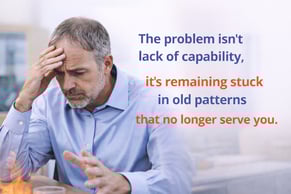 You don’t struggle because you lack capability.
You struggle because specific environments trigger predictable patterns.
If you don’t change those moments—
You don’t change the result.
Growth Demands Strategic Discipline.
One of the most frustrating realities in leadership is this:
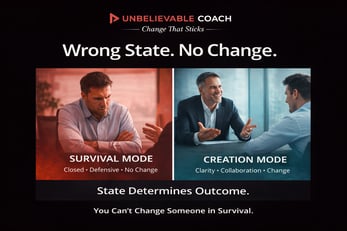
You can’t always get through to your team — especially when it matters most.
 You explain clearly.
You address the issue.
You try to move things forward.
And still… it doesn’t land.
Not because your message is wrong.
But because you’re trying to create change when someone is under stress.
Next Week: Why You Can’t Change Someone Under Stress
Most people don’t struggle because of capability — they struggle because their thoughts, emotions, and behaviors are neurologically conditioned to repeat the same results.
Capability isn’t the problem.
Conditioning is.
.png.jpg?width=481&height=514&name=Its%20not%20a%20Capability%20Problem%20(Tight).png.jpg)
When stress becomes the default state, even smart leaders end up repeating predictable outcomes. Change the pattern — change the result.
Through Change Your Mind. Create New Results training: I help leaders interrupt stress-driven conditioning, regulate under pressure, and build cultures driven by intention rather than reaction.
If you're ready to move from reactive productivity to intentional performance, let’s talk.
 Doug Wick, Unbelievable Coach
Change That Sticks
Schedule a Strategic Conversation
Change the Pattern. Create New Results.
NEXT BLOG: Why You Can’t Change Someone Under Stress



.jpeg?width=150&height=135&name=Hand%20with%20marker%20writing%20the%20question%20Whats%20Next_%20(1).jpeg "Schedule a meeting")