
If your team is operating in a constant state of stress, productivity will suffer — no matter how strong your strategy is.
The real question becomes:
How do you reduce stress without lowering standards?
How do you increase productivity without pushing harder?
If you’re serious about elevating performance, this is where it begins.
The answer begins with understanding brainwaves.
In Change Your Mind. Create New Results we explore four primary brainwave states — Beta, Alpha, Theta, and Delta — and how each one affects performance, creativity, and decision-making.
If you want greater focus, collaboration, and innovation in your workplace, you must help your team move out of high-stress brain states and into creative ones.
How These Brainwaves Work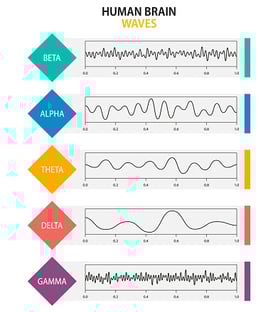
You don’t need neuroscience theory. You need a business application.
Your brain is constantly producing electrical activity. This activity shifts depending on your thoughts and emotional state. Those patterns directly influence how people think, communicate, and decide.
Here’s what matters in business:
High Beta — Survival Mode
High Beta is stress state.
In short bursts, it’s useful. It sharpens focus and helps meet deadlines.
But when people live in High Beta all day:
- Decisions become defensive
- Communication shortens
- Creativity drops
- Collaboration weakens
 High Beta narrows attention. It prioritizes threat detection over innovation.
Survival thinking does not produce strategic growth.
Alpha — The Gateway to Clarity
Alpha is a calmer, more coherent state.
In Alpha:
- Perspective widens
- Listening improves
- Complex ideas connect
- Strategic thinking strengthens
If High Beta narrows the lens, Alpha expands it.
Leaders who access Alpha under pressure don’t lower standards — they raise the quality of decisions.
Theta — Where Pattern Change Happens
Theta is associated with learning, integration, and breaking old habits.
In business terms, this is where:
- Breakthrough thinking occurs
- Emotional reactivity can be interrupted
- New behaviors become possible
You cannot force innovation from a stressed brain. You must create the neurological conditions for it.
This is physiology, not philosophy.
 Delta — Restoration
Delta is deep restorative sleep.
Why does this matter? Because chronic stress disrupts sleep. Poor sleep keeps people reactive. Reactivity lowers performance.
Sustained productivity requires recovery.
How Leaders Can Intentionally Shift These States
Skeptical leaders often ask:
“Are you suggesting meditation at work?”
No.
I’m suggesting if you don’t intentionally manage nervous system state, stress will manage it for you.
Here’s what practical leadership looks like:
1. Reduce Chronic High Beta Inputs
- Clarify priorities weekly
- Structure meetings with defined outcomes
- Eliminate unnecessary urgency
- Reduce ambiguity
Clarity lowers stress. Ambiguity fuels it.
2. Create Alpha Entry Points
Simple resets change cognitive quality:
- Two-minute breathing before strategic meetings
- Silent reflection before major decisions
- Clear outcome statements before discussion
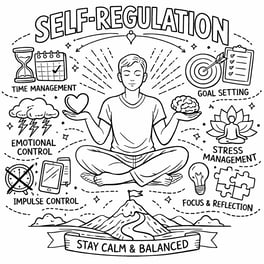 When physiology settles, cognition sharpens.
This doesn’t slow business down. It stabilizes performance.
3. Teach Emotional Self-Regulation
Most performance problems are not capability problems. They are regulation problems.
Dr. Joe Dispenza’s research explains repeated emotional states condition the body. If a culture is addicted to urgency and stress, people unconsciously recreate it.
You don’t fix this with incentives.
You fix it by interrupting the pattern.
In Change Your Mind. Create New Results leaders learn how thoughts trigger emotions, emotions drive behavior, and behavior produces results.
When you change the internal pattern, the external outcome shifts.
4. Build 
A regulated brain learns faster.
When people feel safe:
- They admit mistakes earlier
- They propose ideas sooner
- They collaborate more openly
Innovation rises when perceived threat falls.
This is not soft leadership. It is performance science.
What This Means for Your Organization
If your organization:
- Operates in constant urgency
- Has capable people producing inconsistent results
- Experiences communication breakdown
- Struggles with disengagement
You may not have a talent issue.
You may have a brain state issue.
High-performing organizations are not calmer because they are less ambitious. They are calmer because they regulate intensity intentionally.
They move between focus and recovery deliberately.
That is trainable.
Change Your Mind. Create New Results.
In C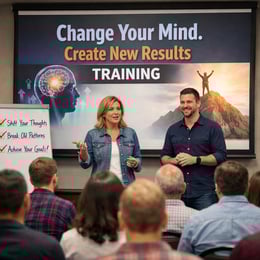 hange Your Mind. Create New Results training, I work with executive teams to help them:
- Recognize when they’re operating in stress-driven High Beta
- Shift into more coherent, creative states
- Interrupt reactive emotional patterns
- Align thoughts, behaviors, and outcomes with their envisioned future
This isn’t mindset motivation. It’s measurable performance transformation.
When you change the state of the brain, you change the quality of decisions.
When you change decisions, you change results.
A Strategic Question
If stress is driving more of your culture than intention is…
How much productivity is being lost to nervous system overload?
What would shift if your leaders learned to regulate before they reacted?
If you’re serious about increasing performance without increasing burnout, let’s have a conversation.
 I work with executive teams who want higher clarity under pressure, stronger collaboration, and intentional performance — not survival-driven productivity.
Because the most strategic move you can make this year may not be another initiative.
It may be teaching your people how to shift the state they operate from.
If you’re ready to move your organization from survival to creation:
Challenge yourself.
Challenge your team.
Challenge your business.
👉 Schedule a free exploratory conversation and begin creating your envisioned future.
Let’s build your culture to perform at its highest level — together.
Let’s talk.
Growth demands Strategic Discipline.
You can understand brainwaves.
You can recognize stress.
You can even know you shouldn’t react.
And still react anyway.
Why?
Because most leadership reactions are not thinking problems.
They are conditioning problems.
Under pressure, the body often responds before the mind has a chance to lead. The result? Smart, capable leaders repeating patterns they swore they’d outgrown.
Next week, we’ll explore why intelligent, experienced leaders still default to reaction — and how to intentionally break the emotional conditioning cycle that drives it.
Most people don’t struggle because of capability — they struggle because their thoughts, emotions, and behaviors are neurologically conditioned to repeat the same results.
.png.jpg?width=481&height=514&name=Its%20not%20a%20Capability%20Problem%20(Tight).png.jpg)
Capability isn’t the problem.
Conditioning is.
When stress becomes the default state, even smart leaders repeat predictable outcomes. Change the pattern — change the result.
Through Change Your Mind. Create New Results., I help leaders interrupt stress-driven conditioning, regulate under pressure, and build cultures driven by intention instead of reaction.
If you're ready to move from reactive productivity to intentional performance, let’s talk.
Doug Wick
Unbelievable Coach
Schedule a Strategic Conversation
Change the Pattern. Create New Results.
NEXT BLOG – Why Smart Leaders Still React — How to Break the Emotional Conditioning Pattern



.jpeg?width=150&height=135&name=Hand%20with%20marker%20writing%20the%20question%20Whats%20Next_%20(1).jpeg "Schedule a meeting")