
Last week, we explored awareness—the ability to observe your thoughts, emotions, habits, and behaviors rather than automatically becoming them.
Awareness is where change begins.
But awareness alone doesn't create change.
The next step is recognition.
Recognition is the moment you catch yourself in the pattern.
It's the instant you realize:
"I'm doing it again."
For many leaders, this moment can feel frustrating. You notice yourself becoming impatient in a meeting. You hear yourself interrupting someone. You recognize the familiar feeling of defensiveness during a difficult conversation. You feel stress tightening your body before you've even consciously decided how to respond.
The pattern is already running.
The difference is that this time you see it.
And that changes everything.
Why Recognition Matters
Most people spend their lives operating from conditioned patterns without realizing it.
Their reactions feel justified.
Their emotions feel true.
Their behaviors feel automatic.
 Because they've repeated the same thoughts, emotions, and responses so many times, those patterns have become familiar.
Recognition interrupts that familiarity.
Instead of saying:
"This is who I am."
You begin saying:
"This is something I'm doing."
That small distinction creates enormous opportunity.
Because you can't change a pattern you don't see.
The Gap Between Trigger and Response
When someone challenges your idea.
When an employee disappoints you.
When a customer complains.
When a project falls behind schedule.
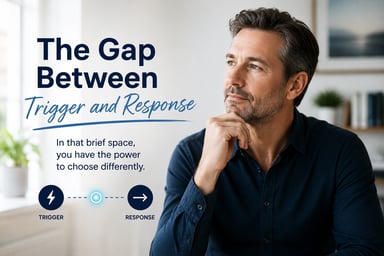 The trigger isn't usually the problem.
The problem is the conditioned response that follows.
Most reactions happen so quickly that people assume they have no choice.
Recognition reveals that there is a choice.
Not because the pattern disappears.
But because you become aware that it exists.
The moment you catch yourself reacting, you've already begun creating space between stimulus and response.
And in that space, new possibilities become available.
Recognition Became Personal
For years, I struggled with my temper.
If I were working on a project and something didn't go right, I could become frustrated almost instantly. I would cuss, slam things down, and occasionally throw tools.
At the time, I justified it.
I told myself that was simply who I was. As long as I apologized afterward, I believed everything was okay.
I can still remember one project that wasn't going well. I became so angry that I threw a screwdriver across the room and punched a hole in the wall.
Around that same time, I heard a story about a father who told his son to pound a nail into a fence every time he lost his temper. Later, he had him pull the nails out. The lesson was simple: even when the nail is removed, the hole remains.
That story increased my awareness of the impact my behavior was having on others.
 But the moment that truly changed me came when my son Josh witnessed one of my outbursts.
He looked at me and asked:
"Dad, why do you always have to get so angry?"
That question stopped me.
For the first time, I wasn't focused on my frustration. I was focused on the effect my behavior was having on someone I loved.
The story about the fence created awareness.
Josh's reaction created recognition.
I began catching myself before I completely lost control.
Not every time at first.
But more often.
Eventually, I learned to pause. I learned to breathe. I learned that anger was not who I was—it was simply a pattern I had practiced for years.
Recognition didn't eliminate the pattern overnight.
But it allowed me to begin changing it.
Why This Is Hard
Many leaders believe that once they become aware of a pattern, it should disappear.
Unfortunately, that's not how change works.
A pattern repeated for years won't disappear simply because you notice it.
Recognition often happens after you've already reacted.
 You become frustrated.
You raise your voice.
You shut down.
Then afterward, you realize what happened.
That is still progress.
In fact, it's exactly how change begins.
First, you recognize the pattern after it happens.
Then you recognize it while it's happening.
Eventually, you recognize it before it happens.
Every step increases your ability to choose differently.
What Effective Leaders Learn
The most effective leaders aren't people who never experience stress, frustration, fear, or uncertainty.
They're people who recognize their conditioned responses faster.
Instead of allowing old patterns to run unchecked, they become observers of their own thinking.
%206-22-26.png?width=351&height=234&name=What%20Effective%20Leaders%20Learn%20(Less)%206-22-26.png) They notice the emotional reaction.
They notice the emotional reaction.
They recognize the familiar story.
They see the behavior beginning to emerge.
And because they recognize it, they gain the opportunity to respond intentionally rather than automatically.
That is where real leadership begins.
Not by controlling other people.
By learning to recognize and manage yourself.
Recognition Is Not the Goal
Recognition is an important milestone, but it isn't the destination.
 Seeing the pattern doesn't automatically change the pattern.
It simply allows you to do something different.
Many leaders assume that once they become aware of a pattern, change should happen automatically. But awareness and recognition alone don't create new results.
You can recognize your impatience.
You can recognize your defensiveness.
You can recognize your tendency to avoid difficult conversations.
You can even recognize the same reaction occurring over and over again.
Yet nothing changes until you make a different choice.
Recognition creates a pause between the trigger and the response.
 And within that pause lies what I call The Choice Point.
The Choice Point is the moment when you decide whether to continue running the old pattern or choose a different response.
Most people never realize they have a choice because the pattern feels automatic.
But the moment you recognize what's happening, you create space.
And space creates options.
That doesn't mean choosing differently is easy.
In fact, your brain, body, emotions, and habits will often pull you toward what is familiar.
But every meaningful change begins with a choice.
A choice to think differently.
A choice to respond differently.
A choice to act differently than you did before.
Recognition gives you the opportunity.
Choice creates the possibility.
Action creates the result.
Next Week: The Choice Point — Turn Awareness Into Action
 Recognition allows you to catch the pattern.
But recognizing a pattern doesn't automatically change it.
Many leaders can identify their stress reactions, emotional triggers, and habitual responses after the fact. Some can even recognize them while they're happening.
The real question is: What do you do next?
The moment you recognize a pattern, you stand at a choice point.
You can continue running the familiar response, or
you can choose a different one.
That choice may seem small, but it has the power to change your actions, your experiences, and ultimately your results.
Next week, we'll explore why awareness and recognition only create change when they lead to action—and how the choices you make in critical moments shape the future you experience.
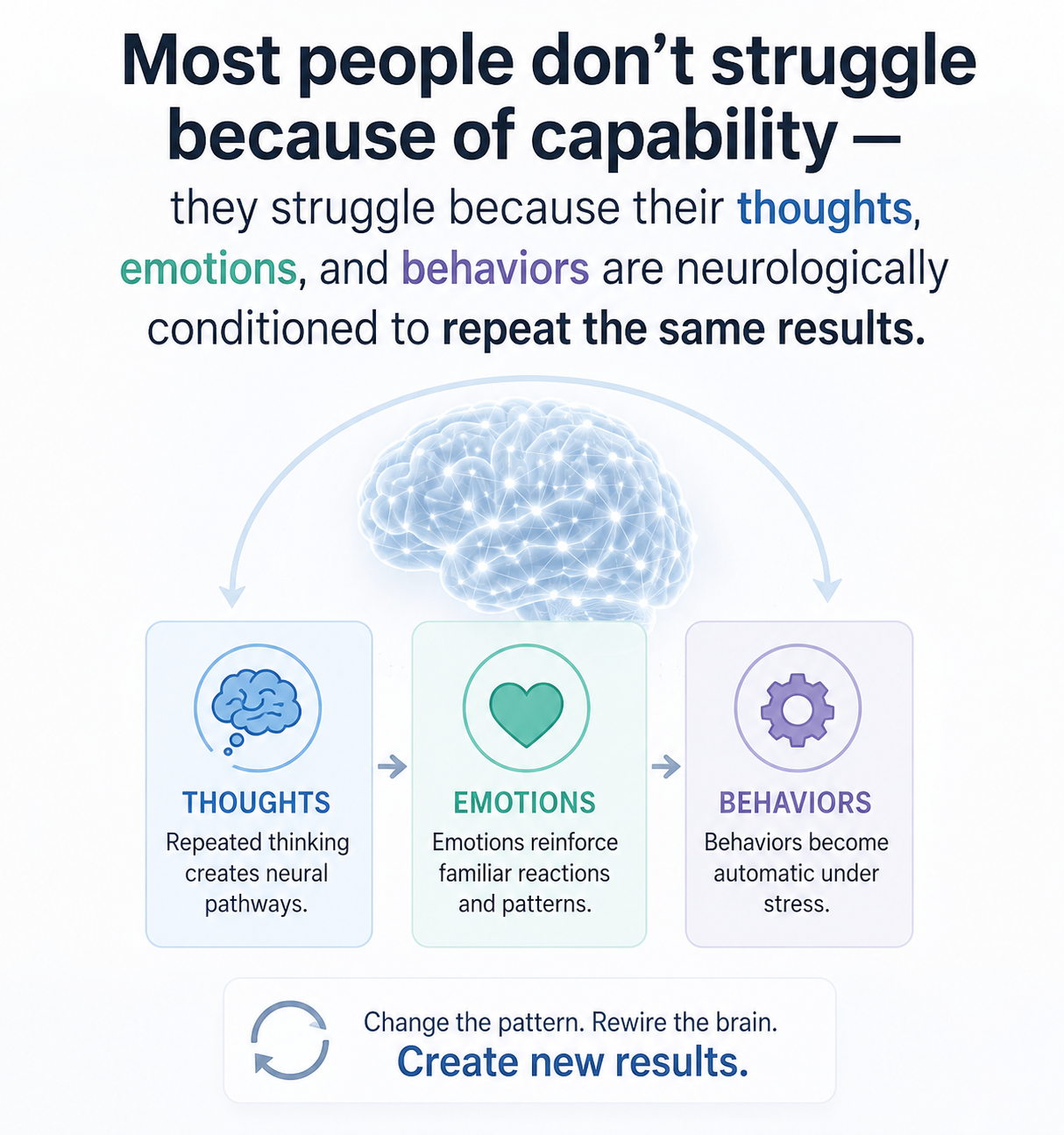
Most people don’t struggle because of capability — they struggle because their thoughts, emotions, and behaviors are neurologically conditioned to repeat the same results.
Through Change Your Mind. Create New Results, I help leaders interrupt stress-driven conditioning, regulate under pressure, and create cultures driven by intention instead of survival.
Whether you're leading a team, an organization, or simply trying to become the best version of yourself, lasting change begins by changing the patterns that drive your results.

Change the Pattern. Change the Result.
Unbelievable Coach — Change That Sticks
Ready to Create Different Results?
If you find yourself recognizing the same frustrations, facing the same leadership challenges, or repeating the same reactions despite your best intentions, perhaps the issue isn't capability.
Perhaps it's conditioning.
Real change begins when leaders learn to recognize their patterns, interrupt them, and choose a different response under pressure.
Because different choices create different actions.
Different actions create different experiences.
And different experiences create different results.
If you want to create a different future for yourself and your organization, let's start the conversation.
Ready to explore what's possible?
Schedule a Strategic Conversation
https://meetme.so/DouglasAWick
Visit: Unbelievable Coach
NEXT BLOG — The Choice Point: Turn Awareness into Action




.jpeg?width=150&height=135&name=Hand%20with%20marker%20writing%20the%20question%20Whats%20Next_%20(1).jpeg "Schedule a meeting")