
How a leader’s emotional state enters conversations, meetings, decisions, and relationships
A leader walks into a meeting frustrated.
Maybe revenue is behind plan. A major project is late. Margins are slipping. Or a member of the leadership team has missed an important quarterly metric—again.
The leader doesn’t have to announce, “I’m stressed.”
Everyone already knows.
They hear it in the questions. They see it in facial expressions. They feel it in the pace of the conversation.
 And before long, the leader’s stress has become everyone’s stress.
That’s one of the challenges of leadership we don’t talk about enough:
Leaders Bring the Weather
I once heard the phrase, “Leaders bring the weather.”
 A calm, intentional leader can walk into a difficult meeting and create an environment where people think, speak honestly, and solve problems.
A stressed leader walks into the same meeting and creates something entirely different.
- People become more cautious.
- They defend themselves.
- They explain rather than explore.
- They become less willing to challenge an idea or admit a mistake.
- The problem needing solving is still there.
If you are this leader, you’ve added fear, defensiveness, or frustration to it.
When Someone Is Missing the Number
Let’s look at a common leadership-team situation.
One of your leaders isn't meeting an important quarterly metric.
It needs to be addressed. Accountability matters.
How you address it matters too.
Under stress, your instinct may be to increase the pressure.
- Why isn't this done?
- What happened?
- How are you going to fix this?
- We've already talked about this.
 Pressure can produce movement. When consequences become uncomfortable enough, people frequently respond.
And sometimes it produces an immediate result.
But Aubrey Daniels' work on performance management makes an important distinction: getting someone to perform to escape or avoid an unpleasant consequence is very different from creating conditions that strengthen the behavior and performance you want repeated.
Pressure may get you the number this quarter.
It doesn't necessarily build the person—or the performance system—to produce the number consistently.
Accountability Without Adding More Stress
 This doesn't mean lowering expectations.
It doesn't mean avoiding difficult conversations.
It certainly doesn't mean accepting poor performance.
It means recognizing the difference between accountability and emotional pressure.
Instead of entering the conversation already frustrated, what if you become curious?
- What's preventing the result?
- Is the expectation clear?
- Does this person have the resources and authority to deliver it?
- Is there a skill issue?
- Is there a process problem?
- Is there a behavior that needs to change?
Most importantly: What needs to happen next?
That's accountability.
Now we're solving the problem rather than simply transferring our frustration to someone else.
Self-Awareness Is Leadership-Team Responsibility
There is another dimension to this.
Self-awareness can't stop with the CEO.
Every member of a leadership team carries an emotional state into the organization.
The sales leader carries it into sales meetings.
The operations leader carries it onto the floor.
The CFO carries it into conversations about spending and performance.
Department leaders carry it to their teams.
And those people carry it into their next conversations.
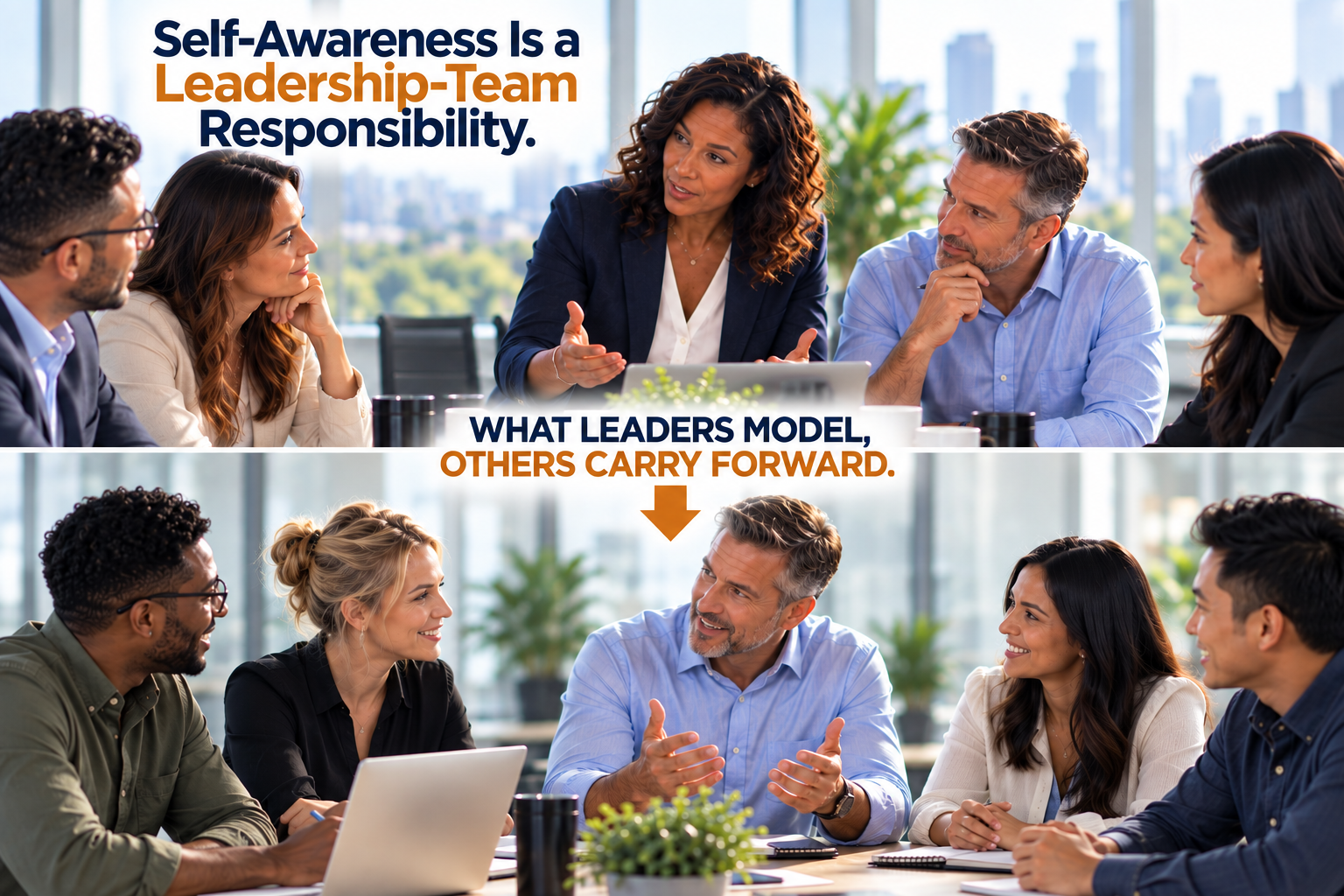 Stress travels.
That's why a healthy leadership team needs enough trust to help one another recognize it.
Imagine being able to say to a colleague:
“You seem more frustrated than usual. Is that how you want to go into this conversation?”
Or:
“I agree that we need to address the performance issue. I'm not sure more pressure is going to get us the result we want.”
That requires trust. It also requires leaders who are self-aware enough to hear the observation without immediately becoming defensive.
What Are You Bringing Into the Room?
 Leadership isn't about never feeling stress.
That's unrealistic.
It's about becoming aware of your internal state before your internal state starts leading everyone else.
Before the difficult conversation, the quarterly review, or the meeting where the numbers aren't what you expected, ask yourself:
What am I bringing into this room?
- Am I bringing frustration?
- Urgency?
- Fear?
- Curiosity?
- Clarity?
- Intention?
Because people aren't only responding to what you say.
They're responding to the state you're saying it from.
A leader's stress never stays with the leader.
Change the Pattern. Change the Result.
Next Blog: How Stress Becomes Culture
 Stress doesn’t just affect individuals. When the same stress-driven reactions happen repeatedly across a team, they can become accepted ways of working. Defensiveness, blame, mistrust, silos, and disengagement stop looking like reactions to stress—and start looking like the culture.
Ready to Create Change That Sticks?
If you or your leadership team are ready to stop repeating old patterns and begin installing new ones, let's have a conversation.
Through Change Your Mind. Create New Results.™, I'll show you how to use neuroscience to intentionally rewire the thinking, emotions, and behaviors that drive performance, leadership, and culture.
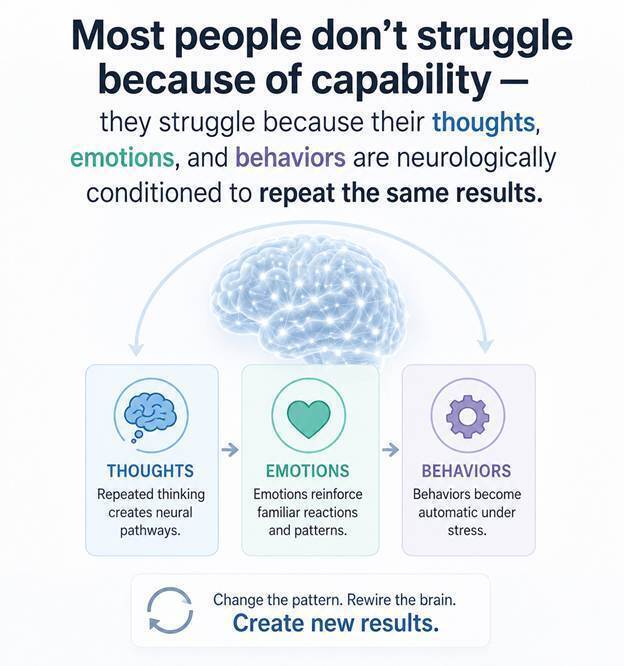
Most people don't struggle because of capability—they struggle because their thoughts, emotions, and behaviors are neurologically conditioned to repeat the same results.
Through Change Your Mind. Create New Results.™, I help leaders interrupt stress-driven conditioning, regulate themselves under pressure, and create cultures driven by intention instead of survival.

Change the Pattern. Change the Result.
Unbelievable Coach — Change That Sticks.
Ready to Create Different Results?
If you're exhausted by pressure, stress, emotional reactivity, or repeating the same leadership patterns, maybe it's time to stop managing symptoms and start changing the conditioning that drives them.
Real change begins when leaders learn how to regulate themselves under pressure—because regulated leaders create healthier cultures, clearer communication, and stronger performance.
If you want to create a different future for yourself and your organization, let's start the conversation.
Schedule your complimentary 30-minute Leadership Conversation today:
https://unbelievablecoach.com/contact/
Because lasting transformation doesn't happen by accident.
It happens one repeated choice at a time.
Schedule a Strategic Conversation
https://meetme.so/DouglasAWick
Visit: Unbelievable Coach
NEXT BLOG - How Stress Becomes Culture.



.jpeg?width=150&height=135&name=Hand%20with%20marker%20writing%20the%20question%20Whats%20Next_%20(1).jpeg "Schedule a meeting")